John the Baptist and the Desert of the Heart

John the Baptist stands at the very heart of the Church’s Advent journey as the great forerunner and prophet who prepares a people ready for the Lord. In the Sunday readings, his desert preaching and baptism of repentance all underline one central task: to point away from himself toward the One who is coming, the Lamb of God who takes away the sin of the world. In a season that can easily become sentimental or distracted, John the Baptist’s voice cuts through with urgency and hope, calling us to clear a straight path for Jesus in our hearts, so that we can recognise and welcome him when he comes.

John the Baptist was a man of the desert. He cuts an odd figure: dressed in camel’s hair, living on locusts and wild honey, preaching repentance on the margins of society — the sort of person we might today call unconventional, even eccentric.

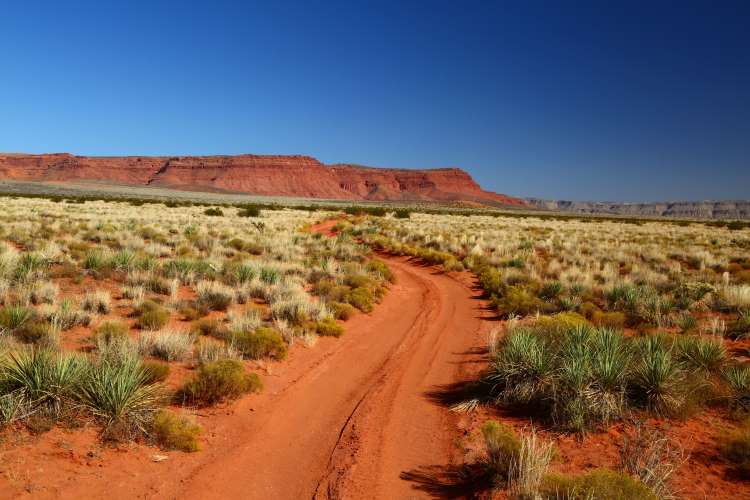
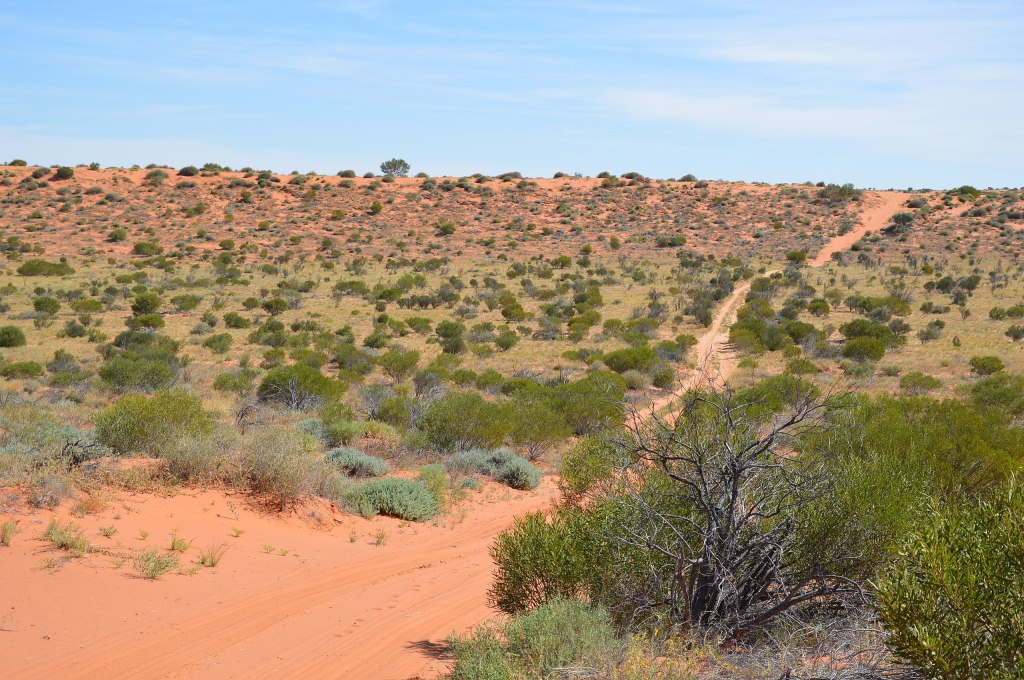
But I want to talk briefly about the desert, the place where John the Baptist lived. In the Bible, the desert is often considered a sacred place. Here in Australia, those of us who have been to the outback know what a desert is like — it is harsh and inhospitable. The desert from which John emerged was, of course, an actual place, but the desert may also be understood as an inner geography, a place within our heart, a place of quiet and solitude.

So, in religious terms, the desert is not so much a place, as an experience. It is not so much a setting, but it is a state of the soul.

There has been a revival of interest in recent decades in the story and the spirituality of the desert. We might think of the Desert Fathers and Mothers in places like Egypt, Palestine, Arabia and Persia, going way back to the 4th century, who fled the big cities and towns and lived a life of solitude. They fled into the desert to find both God and themselves.

But this desert tradition reaches back much further, deep into the Old Testament. Its classic story is the Exodus, the great journey from slavery in Egypt to freedom in the promised land. Those long years in the wilderness were a time of testing and discovery. In the desert, the people of Israel received the Law, learned their vocation, and gradually discovered their identity as the people of God.

So, what happens in the desert from a spiritual point of view?

Firstly, the desert is a place of solitude. But solitude must never be confused with loneliness or isolation.  In our busy world, it is important to find a desert place in our daily activities, to have some time in solitude with God.

Secondly, the desert is a place of testing.  The desert exposes our weaknesses.  It brings to the surface the fears that are buried deep within ourselves.  It is a place where we are confronted with our very selves, where we take a closer look at ourselves, and see things we would rather not see.  In the desert, we face situations in our lives that we, too, would rather forget. 

Many of you will know of the Cistercian monk, Thomas Merton, from the Abbey of Gethsemani in Kentucky. Born in France in 1915, he later moved to the United States, where he became one of the great writers on the spiritual life and spent years as a hermit within the monastery. He believed that we Christians need to find desert places in our lives, in other words, we need to go aside by ourselves, to “make time” for solitude and prayer, and use these opportunities to test our own lives and see whether they are compatible with the sort of life God calls us to live.  If not, then it is time to do something about it.  This season of Advent calls us to think about the desert and the spiritual place it should hold in our lives.

For John the Baptist, it was his time in the desert that helped him see Jesus for who he really was, the Lamb of God, who takes away the sins of the world.  Without the desert, he may never, ever have noticed!   
Sing a New Song to the Lord

I had cause today to think about the many changes which have taken place in church and society over the past 60 years. For those of us who identify as Catholic Christians, the 1960s brought in a great era of change, inspired as it were, by the proceedings of the Second Vatican Council. When Pope John XXIII opened the Council in 1962, he stated in his opening address: ‘For the substance of the ancient deposit of faith is one thing, but the way in which it is presented is another.’ The Council had inspired a ‘spirit of renewal,’ resulting in a cultural change in Church life and practice. Historian John O’Malley notes the change in focus of the Catholic Church at that time, indicated by the sort of language adopted by the Council Fathers. It reads like a litany:

‘From commands to invitations, from laws to ideals, from threats to persuasion, from coercion to conscience, from monologue to conversation, from ruling to serving, from withdrawn to integrated, from vertical and top-down to horizontal, from exclusion to inclusion, from hostility to friendship, from static to changing, from passive acceptance to active engagement, from prescriptive to principled, from defined to open-ended, from behavior modification to conversion of heart, from the dictates of law to the dictates of conscience, from external conformity to the joyful pursuit of holiness.’

I remember several years ago watching a documentary on the BBC about the Indian Public Service. Viewers were shown warehouses that contained pile upon pile of pink and green papers, all bound up and stacked, one upon the other. There were thousands of these piles, as far as the eye could see. When a top Public Servant was asked what they were for, he replied that they were the duplicate and triplicate of every document ever produced by his government department for the past 50 years. When pressed a little further, and asked why these documents were being kept (and of course, why were they being produced in the first place), the answer, as unbelievable as it might seem, was the age-old cliché: ‘because that is the way we have always done it.’ It was Public Servant bureaucracy gone mad (and that was the point of the program), and an unfortunate legacy of British colonial rule. Not only was it a complete waste of tax payer’s money, they had locked themselves into a rigid way of doings things. I was a British Public Servant myself for a good part of my working life, and there were times our office didn’t seem that far removed from its Indian counterpart!

I am not, of course, suggesting that we jettison the past and invent a new program for the future. Certainly, the Second Vatican Council did not suggest any such thing, but it did inspire a new way of thinking in a ‘spirit of renewal.’ As these musings suggest, whether it be church or society, we are not on this earth to merely guard and protect some kind of museum. However, let me suggest this – we are here to cultivate a garden full of abundance – one flourishing with new life, and new promise, which will lead us into the future. Certainly, we are not meant to sing over and over again melodies from the past, just because ‘that is the way we have always done it.’ Rather, we are called, as the psalmist says, to continually ‘sing a new song to the Lord.’

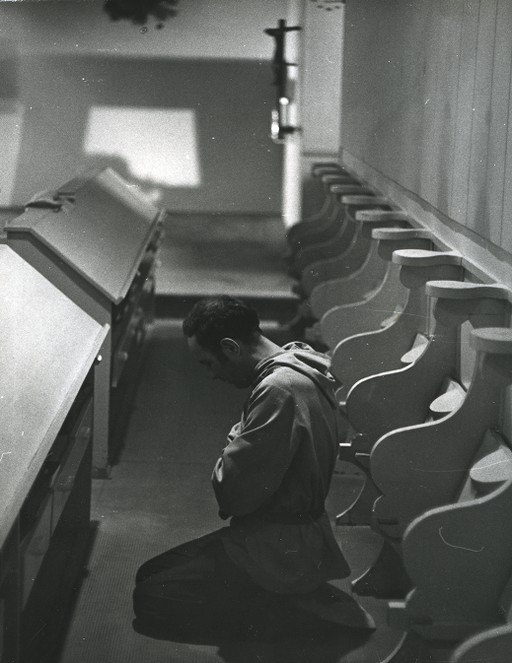
Henri Nouwen’s experience as a ‘temporary’ monk at the Abbey of the Genesee

Henri at the Abbey of the Genesee

In 1974, at the age of 42, renowned spiritual writer Henri Nouwen spent a seven-month period at the Abbey of the Genesee, a Cistercian monastery in upstate New York, not far from Lake Ontario. The result of his monastic experience was published in his best-selling journal, The Genesee Diary, a book I became familiar with when I first took an interest in the contemplative life. Henri describes in the introduction to his ‘spiritual diary’ the reasons for his request to the Abbot, John Eudes Bamberger, to become a ‘temporary’ monk: ‘My desire to live for seven months in a Trappist Monastery, not as a guest but as a monk, did not develop overnight. It was the outcome of many years of restless searching. While teaching, lecturing, and writing about the importance of solitude, inner freedom, and peace of mind, I kept stumbling over my own compulsions and illusions.’ To his surprise, Abbot John Eudes was open to the idea, and on 1st June Henri’s monastic journey began. 

Henri’s desire to enter the Abbey was grounded in the belief that his hectic academic career, and growing success as a spiritual writer needed to have a solid grounding in the spiritual life. As Henri once put it, the spiritual life needs to strike a balance ‘between silence and words, withdrawal and involvement, distance and closeness, solitude and community,’ recognising that ‘a life without a lonely place, that is, without a quiet center, easily becomes destructive.’ Reflecting on Henri’s time at the Genesee, writer Gerald Twomey believed that Henri ‘undertook to stoke the divine fire within himself and sought to enter into the furnace in which inner transformation takes place.’

At the Genesee, Henri undertook the full routine of the monastic life, from the keeping of the Liturgy of Hours, to such manual tasks as baking bread, washing boxes of raisins, peeling potatoes, pressing sheets, handyman tasks, and the collecting of granite rocks for the building of a new monastic church. Life was no holiday at the Genesee, especially for Henri, who found most manual tasks difficult, but the daily routine did allow him to reflect on his relationship with God: ‘Here in the monastery I could look more easily beyond the boundaries of the place, the state, the country, and the continent, and become more intimately aware of the pain and suffering of the whole world, and respond to them by prayer, correspondence, gifts, or writing. I also felt that in this retreat my friends and family came closer to me. I experienced especially that a growing intimacy with God creates an always widening space for others in prayer. I had a real sense of the power of prayer for others and experienced what it means to place our suffering friends in God’s presence right in the center of your heart.’ Ironically, the physical distance which the cloister put between himself, his friends, and the world, brought him closer to his fellow human beings.

One of the most memorable images for the spiritual life which one can easily take away from Henri’s diary is that of a wagon wheel. This image came to him as he was preparing to leave the monastery and return to the academic world from which he came. For Henri, the image of a wagon wheel demonstrated that the closer someone came to God, the closer it brought them to one another, although in life they were travelling on different paths: ‘God is the hub of the wheel of life. The closer we come to God the closer we come to each other. The basis of community is not primarily our ideas, feelings, and emotions about each other but our common search for God. When we keep our minds and hearts directed toward God, we will come more fully “together.” During my stay in the Abbey I saw and experienced how many men with very different backgrounds and characters can live together in peace. They can do so not because of a mutual attraction toward each other, but because of the common attraction toward God, their Lord and Father.’

In the last four years, many of us have witnessed what happens when the basis for a society becomes built on ‘ideas, feelings, and emotions about each other,’ rather than on our ‘common search for God.’ Dare I say, Trump’s version of America came to enshrine such a belief. But Henri, through his monastic experience, suggests a new way – or should I say, an old and tested way. Henri’s image of a wagon wheel offers us a way to place our relationship with one another in context, bringing ourselves closer together despite our differences, while at the same time growing in our common search for God.

The gathering of granite rocks for the construction of the new abbey church was to serve as a metaphor for Henri’s time at the Genesee. ‘During these months a church was built, a new space for God. Is this going to be true for me, too?’ he thoughtfully wrote. But isn’t it just as true that we all need to find new spaces for God in our lives. A prayer which Henri wrote after a second sabbatical at the Abbey (and one which I love) takes up this theme. Perhaps, for those of us who make occasional retreats with various monastic communities around the world, we too can make Henri’s prayer our own:

‘Lord, my stay at the abbey is coming to an end, and in a few days, I will no longer have the support of the regular hours of communal prayer, of the silence of the house, and of the loving care of this beautiful brotherhood [or sisterhood]. I have to move to a busier place … because it is to that active task that you have called me. But I pray that I will keep you in the center of my thoughts, words and actions. I pray that your presence, which I have sensed so strongly here, will also guide my life …  but most of all I pray that I will keep taking the time to be with you and you alone.’ Amen.

Ash Wednesday and Eternity

Sydney has always put on a spectacular New Year Firework displays. In my opinion it is one of the few things Sydney does better than Melbourne. When the clocks ushered in the 3rd Millennium in the year 2000, I remember watching the coverage on television from my home in Somerset. The BBC crossed live to each major city around the world as each welcomed in the New Year. That year Sydney had outdone itself with its firework display on the Harbour Bridge. At the very end of their spectacular display in 2000, millions of viewers around the world beheld a single word fashioned in a style known as copperplate, emblazoned across the Harbour Bridge. That single word was ‘Eternity.’

That word ‘Eternity,’ written in chalk in the same elegant copperplate, is estimated to have appeared on Sydney’s footpaths over half a million times between 1930 and 1967. It was written by a man named Arthur Stace. Arthur Stace was born in Sydney’s Balmain slum in 1884 and lived a life on the wrong side of the law. But in August 1930, Arthur attended a service at the Burton Street Baptist Church in Darlinghurst. The preacher was a Reverend John Riley, a noted fire and brimstone preacher. Riley shouted from the pulpit, “I wish I could shout ‘eternity’ through all the streets of Sydney!” Recalling that day many years later, Arthur remembered the Rev’d Mr Riley repeating, “Eternity, Eternity.” “His words were ringing through my brain as I left the Church,” Arthur said. “Suddenly I began crying, and I felt a powerful call from the Lord to write “Eternity.” I had a piece of chalk in my pocket and I bent down right there and then and wrote it.”

From that day onwards, Arthur began his unique ministry. Each day he started early, usually before sunrise, and wandered through the streets of Sydney, bending down and writing on the pavement in large, elegant copperplate, ‘Eternity.’ He died in 1967 at the age of 83, having written this one word at least 50 times each day for 37 years. His special ministry was to make us think, not just about living in the here and now, but also what lies ahead for us in the future, in eternity.

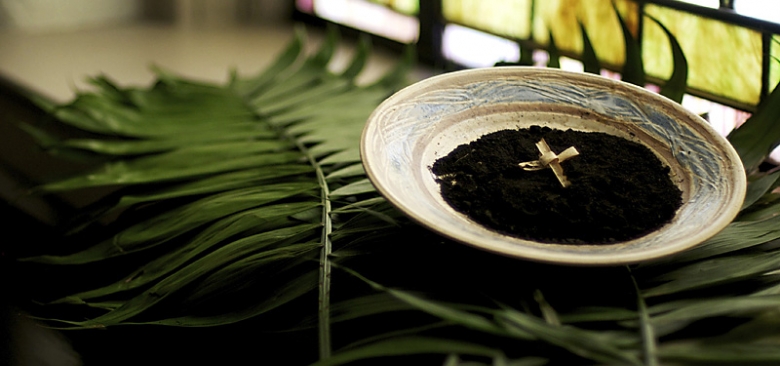
On Ash Wednesday each year, Christians receive a reminder of their own eternity. Ash is placed on our foreheads and we hear the words: “Remember that you are dust, and to dust you shall return.” It is a reminder that this world, beautiful as it is, is not all that there is. Our life might be controlled and dominated by time, but our destiny exists elsewhere in eternity.

Fr Alan Jones, one-time Dean of San Francisco’s Grace Cathedral, says that a friend of his asks his students at the beginning of each academic year, “what truth they want to become by the end of their lives.” Many of us, Jones says, have been telling a story to ourselves, and to the world, for so long, about what we think is real, that we come to foolishly believe that it is absolutely true (and without question).

Lent calls us into the desert experience, to be probed – to think about ourselves in an intentional way, to think about eternity, and the false story we’ve been telling ourselves all our lives. To ask the question: ‘How far is it a lie?’ As Fr Henri Nouwen described Lent: “It is a time to re-focus and re-enter a place of truth.” So, the real question we should be asking ourselves this Lent is this: ‘Is the kind of life we currently lead, a life that will lead us into eternity?’     

Children and Faith


It is always said that when hosting a dinner party, one should never talk about politics, religion or sex, at least not if you want to keep your friends. Yet often these three subjects find their way into the conversation. So here is an all too common scenario.

The argument at the dinner party becomes rather heated over the subject of whether or not one should involve their children in a religious faith. The major consensus is that it is a bad thing.  And don’t we hear this argument regularly, that we must not pass on to children what we believe, in case we are brain washing them, by limiting their freedom to choose. “So are you adverse to all knowledge, or just that which includes the name of God?” would be my retort at such a dinner party.

But I’m sure the furor which would ensure after such a question would be fervently reiterated by all those present (apart from me) that this is not a debate about knowledge, but about one involved in the inflicting of views. However, I would argue, “Don’t we do this all the time? Pass on what we know and believe to be true, in all spheres of our lives, especially related to what we hold dear – relationships, morals, etc.? And don’t we want our children to be part of something greater than themselves, providing a structure for living? Why should we not offer them preparation, a springboard from which to proceed, in matters of belief? Isn’t it our responsibility to offer a framework for moral guidance, and a support system? Then let them decide in maturity whether or not they wish to continue within it?”

Well, I suspect a deep silence would follow such a statement, and hang in the air like some thunderous cloud. Then someone would suddenly remember their babysitter, the rest would look at their watches, and there would be noises that it is time to go as it is late.

Our present age creates ambivalence about faith which some people are fearful of addressing.

I’ve often been asked, especially when I was a priest, “How can someone of your intelligence believe what you believe?” to which my usual reply is, “How can someone of your intelligence not believe in anything?”

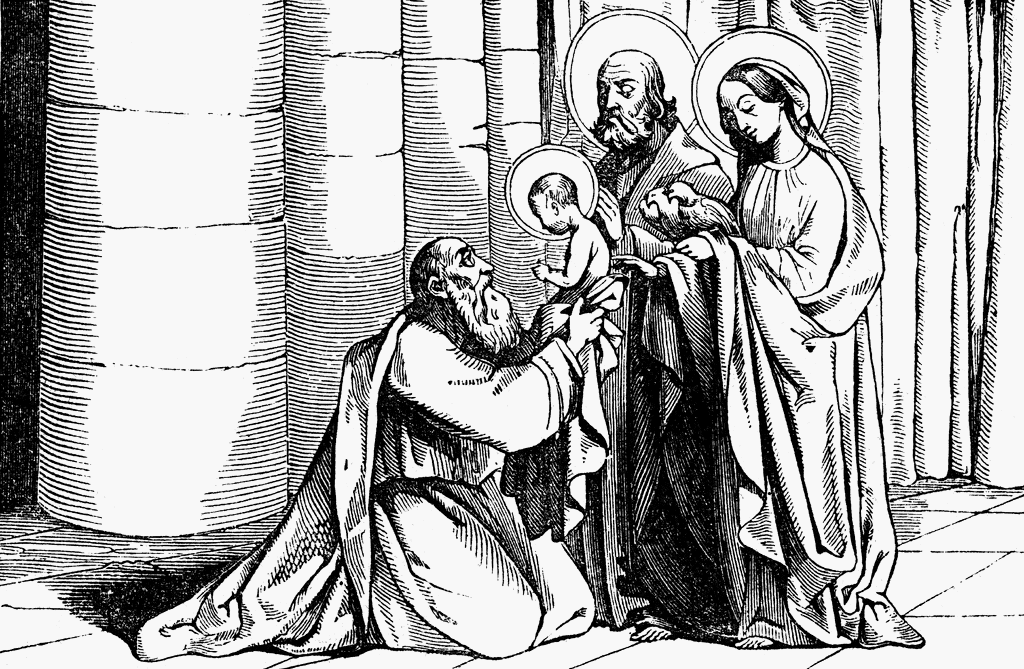
Yesterday the Christian Church celebrated the Feast of the Presentation of Christ in the Temple, commonly referred to as Candlemass. The Gospel set for this feast (Luke 2:22-40) is a rich and beautiful story which helps us to understand the depth and richness of the Christian faith – of honouring God, recognizing the value and need for tradition, the need for membership of a community, and Jesus’ place within all of them.

Jesus was a Jew, of Jewish parents, with Joseph’s heritage recorded as far back as King David. He was part of a religion based within a community of worshippers, and part of a tradition which had rules for membership, some of which were brought into the church, but Jesus lived and died a practicing Jew. As a child, Jesus’ parents offered him a springboard from which to proceed, especially in matters of belief. Then in his maturity, he took that foundation and tradition, thought wisely for himself, and decided to continue within it.

Buddhism: a Religion or a Philosophy

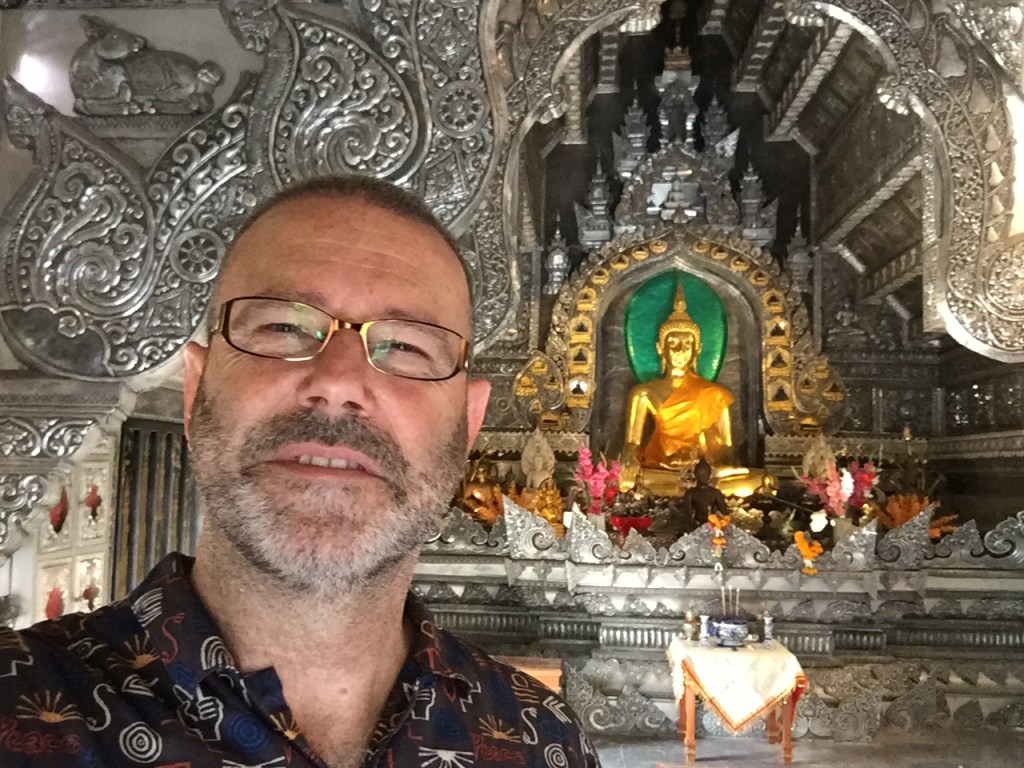
At Wat Srisuphan (The Silver Temple), Chaing Mai

Currently I am holidaying in the beautiful capital of northern Thailand, Chaing Mai, which has around 300 temples or ‘wats’ scattered around the old city and surrounding area. Certainly, the practice of Buddhism is very much an essential part of Thai culture, apparent from the number of locals found offering devotions in the various temples I have visited. It is a timely reminder just how secular we are in Australia where religion of any kind is not a visible part of our everyday life.

There are estimated to be around 300,000 monks living in Thailand. Apparently, every male in Thailand is required to become a monk for a period of time before the age of 20, and although the length of a monk’s internship is expected to last three months, the majority only remain monks for just a few weeks. Young men do this in order to receive good karma and gain merit.

For the westerner, the question often arises whether Buddhism is a religion or a philosophy, particularly as the Buddha was no god, and the keystone of the Buddhist way is personal and spiritual development. Therefore, despite what one might think they are witnessing in temple rituals, the Buddha is not worshipped, but honoured, much like many Christians honour the saints, and the Buddha provides a role model in the practice of the spiritual life. While religious traditions of the West are best characterised as belief systems, Buddhism, I believe is best described as a philosophy, or perhaps even a form of psychotherapy, or an education system.

The Buddha did not receive some privileged, esoteric knowledge, but rather, what he did receive was an awareness of the human condition, defined by the Sanskrit word duhkha (usually translated as suffering), and the way towards its cessation. It was this enlightened knowledge, and the truth he discovered, which gave the Buddha a natural integrity, dignity, and authority to his life.

As a form of teaching, the Buddha presents his findings in the form of a medical diagnosis, including an examination, a prognosis, and a treatment plan, thus defining the Buddha as a healer, not a saviour. Referred to as the cattāri ariyasaccāni or Four Noble Truths, the Buddha’s findings are summed up in just four Sanskrit words: duhkha, trishna, nirvāna and mārga. Duhkha might also be defined as ‘a state of being which is always askew,’ or just plain unsatisfactory; trishna can be translated as ‘cause,’ (the cause of our duhkha being trsnā, our craving and attachment, and avidyā, or our ignorance of such things), while nirvāna is the moment when suffering is extinguished. Mārga is the path leading to nirvāna, which is broken up into a series of component parts, known as the āryāstāngamārga or The Eightfold Path, whose main themes include the cultivation of wisdom, virtue and meditation. 

Buddhism offers a timely reminder to any who follow a religious tradition, that a holistic approach is needed for those on the spiritual path, one which provides self-understanding, a greater grasp of our place in the world, and our care for one another. Any healthy relationship is based on a greater understanding of oneself, and I believe this is no less true than with our relationship with God, the wonder and source of our being and human existence.

The Light of Life


In the northern hemisphere, Europeans celebrate Christmas at the darkest and coldest time of the year – and the day is at its shortest. Hence, many of our Christmas customs, even here in the Southern Hemisphere, originate from that context. Christmas lights on our Christmas trees are an obvious example; they give light in the midst of winter darkness. In the Christian Church, our Christmas liturgy today makes many references to light. Jesus is described in our gospel reading set for Christmas Day as ‘the light of all people’ and the ‘light that shines in the darkness, and the darkness did not overcome it.’ For Christians, Jesus fulfils the prophecy of Isaiah: ‘The People that walked in darkness have seen a great light; on those who live in land of deep shadow, a light has shone.’

There is a wonderful story about Blessed Mother Teresa of Calcutta on a visit she made to Melbourne. It is a story which she recounted herself. While she was here, she visited a poor man in my own suburb of Fitzroy, who nobody knew existed. He lived in one small room which was very filthy and totally disorganized. The window was closed and the curtains were permanently drawn.  The man lived in perpetual darkness – there was no light in the room. There were cobwebs everywhere, the floor was filthy, and dust covered everything, and he didn’t seem to have a friend in the world.

After talking with him for a while, Mother Teresa began to clean and tidy the room. At first the man protested. ‘Leave it alone,’ he said, ‘it’s all right as it is.’ But she went ahead anyway. As she cleaned, she continued chatting with him. Under a pile of rubbish, she found an old oil lamp covered with dust. She cleaned it and discovered that it was quite a beautiful object. And she said to him, ‘You’ve got a beautiful lamp here. How come you never seem to light it?’ ‘Why should I light it?’ he replied. ‘I’ve become accustomed to living in darkness, and no one ever comes to see me anyway.’ ‘Will you promise to light it if one of my sisters comes to see you on a regular basis?’ she said. The man consented to do this.

Two of Mother Teresa’s nuns began to visit him regularly. Then things began to gradually improve for him. His life began to take on new meaning. He became more positive in his attitude. He became more talkative. He smiled often. His room became cleaner and things were put in their right place, and most of all, every time the sisters came to visit him he lit the lamp. All this happened because someone took the time to visit him and patiently walk with him. Then one day he apparently said to them, ‘Sisters, I’ll be able to manage on my own from now on. But do me a favour. Tell that first sister who came to see me, that the light she lit in my life is still burning.’

We live in a world darkened by war, violence, terrorism, and suffering of different kinds. I’m sure all of us, without exception, have experienced some form of darkness in our personal lives, and within our families – sorrow, disappointment, illness, pain, sin, guilt, loneliness, and so on.

Each of us has the potential to be a source of light to a darkened world. But unless our own lamp is lit, we will not be able to enlighten anyone else. There is great joy in being in the light. But there is an even greater joy in being a source of light to others. God has called us out of darkness into the wonderful light of his Son. We must try to live as children of the light. The effects of the light are seen in goodness, right living and truth.

This Christmas, for those of us who celebrate the birth of Jesus, may we hear those gentle words of his: ‘Anyone who follows me, will never walk in darkness, but will always have the light of life.’

Wasting Time Waiting


The Christian Church is currently in the middle of its Advent season, and ‘waiting’ is the key theme of this liturgical season. Christians are a people who are waiting. But for many, waiting is often a time of tedium, even boredom, a time of uncertainty, and perhaps even anxiety. We can become very impatient with waiting.

However, one way to think of Advent is to liken it to a pregnancy. A spiritual writer once wrote: ‘Waiting is an impractical time to our way of thinking. It’s good for nothing, but mysteriously necessary to all that is coming. As in pregnancy, nothing of value comes into being without a period of quiet incubation. Not a healthy baby, not a loving relationship, not a reconciliation, not a work of art, and never a human transformation. Brewing, baking, simmering, fermenting, ripening, germinating, gestating, are all processes of becoming, and they all demand a period of waiting.’

I have always thought that for those of us on the spiritual path, this season just before Christmas is a time set aside so that we can see with renewed and transformed minds, which is what repentance (the Greek word metanoia) actually means. To possess a renewed and transformed mind, is to have literally turned around our old thoughts and old ways.

There are always many things that constantly demanding our attention. But during this season of waiting, I believe it is a good time for all of us to look again at our lives and how we spend our time. Looking back over his many years in prison, Nelson Mandela had this to say: ‘There is no prospect about prison which pleases – with the possible exception of one. One has time to think. In the vortex of the struggle, which one is constantly reacting to changing circumstances, one rarely has the chance to consider carefully all the ramifications of one’s decisions and policies. Prison provided the time… to reflect on what one had done and not done.’

I suggest ‘wasting time waiting’ is an important part of the Christian call to prepare a way for the Lord this Christmas.

Our Earthly Tents


Since leaving my parent’s home at the age of 21, I estimate that I have lived in over 15 houses in the past 34 years. To describe my existence as peripatetic is an understatement. In the monastic world I would probably be classified as a gyrovague, who St Benedict classified in his Holy Rule among the most detestable of all monks. As monks, gyrovagues spend their entire lives drifting from region to region, monastery to monastery, always on the move, never settling down, and are slaves to their own wills and gross appetites. Benedict thought it was better to keep silent about them rather than to speak of their disgraceful way of life. And yet he could not help himself and wrote about them in his Rule anyway! I will let others be the judge whether I ought to be considered a gyrovague, but it is nonetheless true that I have been on the move for much of my life and found it difficult to settle down into one place.

This made me think about what it means to have home in one’s life, as I have claimed over the years many places as my home. Certainly, to have a home is not just to have a house. A home is a place where we feel we belong; a place where we offer hospitality, and share our love with one another. But in spite of all the buildings we put up and roots we put down, it is true to say that here on earth we really do not have a permanent and lasting home. Therefore, in some sense, perhaps we could all be labelled gyrovagues. All we have in reality, as St Paul says, is a kind of tent (2 Corinthians 5:1). And when it is our time to depart this world, that tent will be folded up!

In John’s Gospel, during the Last Supper, Jesus began to talk to his apostles about the fact that he was leaving them. On hearing this, they were plunged into sorrow. But he consoled them with these words, which are probably some of the most beautiful in the Gospels, and are often used at Christian Funeral Services for obvious reasons:

Do not let your hearts be troubled. Believe in God: believe also in me. In my Father’s house there are many dwelling-places.  If it were not so, would I have told you that I go to prepare a place for you?  And if I go and prepare a place for you, I will come again and will take you to myself, so that where I am, there you may be also’ (14:1-3).

This is certainly good news, because when it is time to fold up our earthly tents, we have an eternal home to go to, namely, the Father’s house.

Sister Joan Chittister, OSB, reflects in her writings that: ‘The search for God is a very intimate enterprise. It is at the core of every longing in the human heart. It is the search for ultimate love, for total belonging, for the meaningful life.’  We spend our whole lives searching for God, for that is our Christian journey and calling. And yet to die is, in the end, to find God, to meet God, and to see God.

Thomas Merton and the Inner Desert

For Christians, this time of the year is known as Advent, and in the excerpt from the New Testament which is read in most churches around the world this coming Sunday, John the Baptist, the cousin of Jesus, takes centre stage. In Matthew’s Gospel (Matthew 3:1-12) he appears in the desert of Judea, in clothing made of camel’s hair, with a leather belt around his waist. His food was locusts and wild honey and he baptised those who came to him in the Jordan River as they acknowledged their sins.

I believe the desert, from which John the Baptist emerged, may be understood at several different levels. One is to naturally think of the desert as an actual place, like we might think of the wilderness regions of Outback Australia. But it is also possible to think of the desert as something that can exist from within, in our deepest being, an inner geography of abandonment; the desert within being the valley of our deepest solitude. The desert, therefore, is not primarily a place, but an experience. It is not a setting, but a state of being within.  

It is true to say that there has been a revival of interest in recent decades in the story and the spirituality of the desert. My library has many books on the subject. And monastic libraries are full of such books. The story of the desert is associated with the Christian Desert Father and Mothers who fled into the deserts of Egypt, Palestine, Arabia and Persia in the 4th and 5th centuries. They fled into the desert to find both themselves and God.  

But the desert tradition, however, finds its origins much earlier in the Hebrew Scriptures, especially in the epic story we call the Exodus. The long years of the Exodus were a period of testing and discovery, and it was in the desert that the children of Israel received the Law, and found their vocation and identity.  

Importantly, the solitude of the desert teaches the necessity of waiting upon God. And waiting upon God is one of the great themes of the Advent season. It teaches lessons of patience, attentiveness, an unhurried learning, waiting in silence, and perseverance. But the desert, is also a place of testing. The desert exposes our vulnerabilities and brings to the surface those fears that are buried deep within ourselves. 

So if you go to the desert to rid yourself of all those awful problems in life, you will, in fact, be wasting your time. Rather, you go to the desert for a total confrontation with yourself, for one goes to the desert, to see more, and to see better. One goes to the desert especially to take a closer look at those things one would rather not see, to face situations one would rather avoid, and to answer questions one would rather forget.

For American Trappist monk, Thomas Merton, one of the great Christian Spiritual thinkers of the 20th century, his whole life was a journey into the desert.  After making a retreat at the Cistercian Abbey of Our Lady of Gethsemani in Kentucky, Merton wrote to the Abbot asking if there was any prospect of him being received as a novice. The abbot received him into the community in 1941 at the age of 26. But despite the austerities of Cistercian life at that time, Thomas Merton longed for even more solitude, and in 1965 at the age of 50, he received permission to take up full-time residence in a small hermitage dwelling on the monastic property. What did life in his hermitage teach him? He wrote in his book, ‘The Silent Life’ the following (and please forgive the none inclusive language of the time): ‘The world of men,’ he wrote, ‘has forgotten the joys of silence, the peace of solitude which is necessary, to some extent, for the fullness of human living. Not all men are called to be hermits, but all men need enough silence and solitude in their lives to enable the deep inner voice of their own true self to be heard at least occasionally. When that inner voice is not heard, when man cannot attain to the spiritual peace that comes from being perfectly at one with his own true self, his life is always miserable and exhausting. For he cannot go on happily for long unless he is in contact with the springs of spiritual life which are hidden in the depths of his own soul.’

Thomas Merton was emphatic on the need for solitude in the life of every Christian. Every Christian needs to take time out to be alone with God – it can take the form of a day retreat, an hour’s walk along the beach, or a quiet time in your favourite room in the house. Those who wish the lead a spiritual life need to make their own desert space. ‘Without solitude of some sort, there is, and can be, no maturity’, Thomas Merton wrote, and ‘unless individuals become empty and alone, they cannot give themselves in love, because they do not possess the deep self which is the only gift worthy of love.’

Thomas Merton, I believe, was truly a very spiritual, holy and insightful man, a true saint of the 20th century. He knew what was most needed to lead a truly spiritual life; the cultivation of an inner desert.