John the Baptist stands at the very heart of the Church’s Advent journey as the great forerunner and prophet who prepares a people ready for the Lord. In the Sunday readings, his desert preaching and baptism of repentance all underline one central task: to point away from himself toward the One who is coming, the Lamb of God who takes away the sin of the world. In a season that can easily become sentimental or distracted, John the Baptist’s voice cuts through with urgency and hope, calling us to clear a straight path for Jesus in our hearts, so that we can recognise and welcome him when he comes.
John the Baptist was a man of the desert. He cuts an odd figure: dressed in camel’s hair, living on locusts and wild honey, preaching repentance on the margins of society — the sort of person we might today call unconventional, even eccentric.
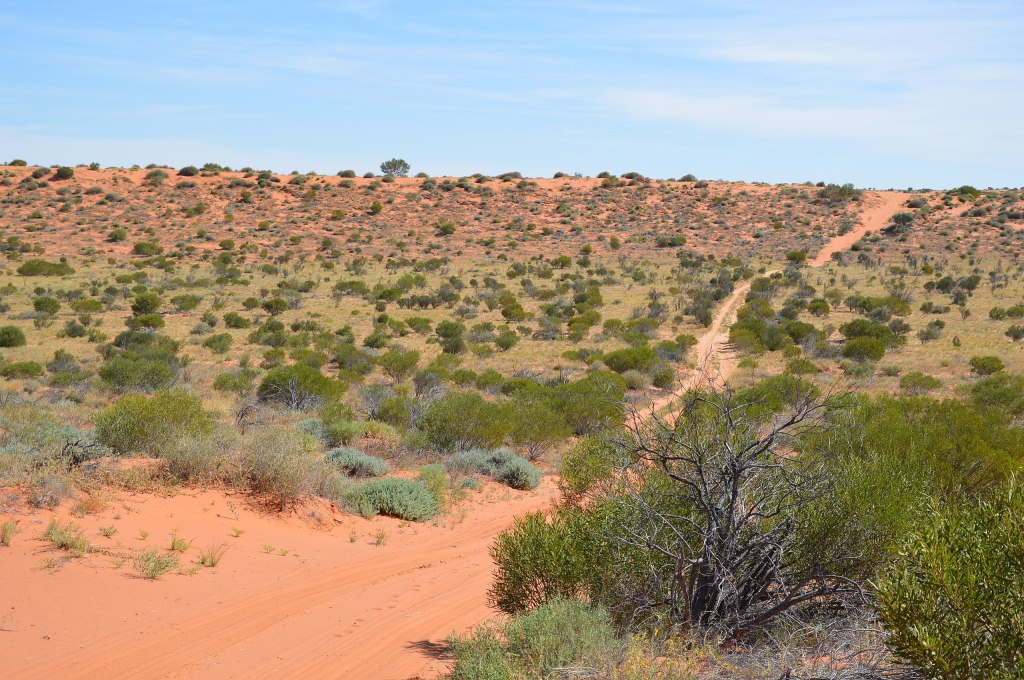
But I want to talk briefly about the desert, the place where John the Baptist lived. In the Bible, the desert is often considered a sacred place. Here in Australia, those of us who have been to the outback know what a desert is like — it is harsh and inhospitable. The desert from which John emerged was, of course, an actual place, but the desert may also be understood as an inner geography, a place within our heart, a place of quiet and solitude.
So, in religious terms, the desert is not so much a place, as an experience. It is not so much a setting, but it is a state of the soul.
There has been a revival of interest in recent decades in the story and the spirituality of the desert. We might think of the Desert Fathers and Mothers in places like Egypt, Palestine, Arabia and Persia, going way back to the 4th century, who fled the big cities and towns and lived a life of solitude. They fled into the desert to find both God and themselves.
But this desert tradition reaches back much further, deep into the Old Testament. Its classic story is the Exodus, the great journey from slavery in Egypt to freedom in the promised land. Those long years in the wilderness were a time of testing and discovery. In the desert, the people of Israel received the Law, learned their vocation, and gradually discovered their identity as the people of God.
So, what happens in the desert from a spiritual point of view?
Firstly, the desert is a place of solitude. But solitude must never be confused with loneliness or isolation. In our busy world, it is important to find a desert place in our daily activities, to have some time in solitude with God.
Secondly, the desert is a place of testing. The desert exposes our weaknesses. It brings to the surface the fears that are buried deep within ourselves. It is a place where we are confronted with our very selves, where we take a closer look at ourselves, and see things we would rather not see. In the desert, we face situations in our lives that we, too, would rather forget.
Many of you will know of the Cistercian monk, Thomas Merton, from the Abbey of Gethsemani in Kentucky. Born in France in 1915, he later moved to the United States, where he became one of the great writers on the spiritual life and spent years as a hermit within the monastery. He believed that we Christians need to find desert places in our lives, in other words, we need to go aside by ourselves, to “make time” for solitude and prayer, and use these opportunities to test our own lives and see whether they are compatible with the sort of life God calls us to live. If not, then it is time to do something about it. This season of Advent calls us to think about the desert and the spiritual place it should hold in our lives.
For John the Baptist, it was his time in the desert that helped him see Jesus for who he really was, the Lamb of God, who takes away the sins of the world. Without the desert, he may never, ever have noticed!
 Philip John Bewley