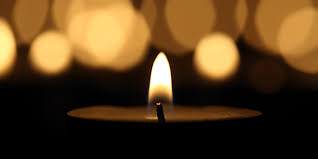
In the northern hemisphere, Europeans celebrate Christmas at the darkest and coldest time of the year – and the day is at its shortest. Hence, many of our Christmas customs, even here in the Southern Hemisphere, originate from that context. Christmas lights on our Christmas trees are an obvious example; they give light in the midst of winter darkness. In the Christian Church, our Christmas liturgy today makes many references to light. Jesus is described in our gospel reading set for Christmas Day as ‘the light of all people’ and the ‘light that shines in the darkness, and the darkness did not overcome it.’ For Christians, Jesus fulfils the prophecy of Isaiah: ‘The People that walked in darkness have seen a great light; on those who live in land of deep shadow, a light has shone.’
There is a wonderful story about Blessed Mother Teresa of Calcutta on a visit she made to Melbourne. It is a story which she recounted herself. While she was here, she visited a poor man in my own suburb of Fitzroy, who nobody knew existed. He lived in one small room which was very filthy and totally disorganized. The window was closed and the curtains were permanently drawn. The man lived in perpetual darkness – there was no light in the room. There were cobwebs everywhere, the floor was filthy, and dust covered everything, and he didn’t seem to have a friend in the world.
After talking with him for a while, Mother Teresa began to clean and tidy the room. At first the man protested. ‘Leave it alone,’ he said, ‘it’s all right as it is.’ But she went ahead anyway. As she cleaned, she continued chatting with him. Under a pile of rubbish, she found an old oil lamp covered with dust. She cleaned it and discovered that it was quite a beautiful object. And she said to him, ‘You’ve got a beautiful lamp here. How come you never seem to light it?’ ‘Why should I light it?’ he replied. ‘I’ve become accustomed to living in darkness, and no one ever comes to see me anyway.’ ‘Will you promise to light it if one of my sisters comes to see you on a regular basis?’ she said. The man consented to do this.
Two of Mother Teresa’s nuns began to visit him regularly. Then things began to gradually improve for him. His life began to take on new meaning. He became more positive in his attitude. He became more talkative. He smiled often. His room became cleaner and things were put in their right place, and most of all, every time the sisters came to visit him he lit the lamp. All this happened because someone took the time to visit him and patiently walk with him. Then one day he apparently said to them, ‘Sisters, I’ll be able to manage on my own from now on. But do me a favour. Tell that first sister who came to see me, that the light she lit in my life is still burning.’
We live in a world darkened by war, violence, terrorism, and suffering of different kinds. I’m sure all of us, without exception, have experienced some form of darkness in our personal lives, and within our families – sorrow, disappointment, illness, pain, sin, guilt, loneliness, and so on.
Each of us has the potential to be a source of light to a darkened world. But unless our own lamp is lit, we will not be able to enlighten anyone else. There is great joy in being in the light. But there is an even greater joy in being a source of light to others. God has called us out of darkness into the wonderful light of his Son. We must try to live as children of the light. The effects of the light are seen in goodness, right living and truth.
This Christmas, for those of us who celebrate the birth of Jesus, may we hear those gentle words of his: ‘Anyone who follows me, will never walk in darkness, but will always have the light of life.’
 Philip John Bewley
Thank you, Fr P .. beautiful …!
Very best wishes to you and Andrew for Christmas and the New Year.
Richard x
Sent from my iPhone
>
LikeLike
Very lovely. Thank you, Philip and all good wishes to you and Andrew (and Tippi) for Christmas and the New Year.
Faith
LikeLike