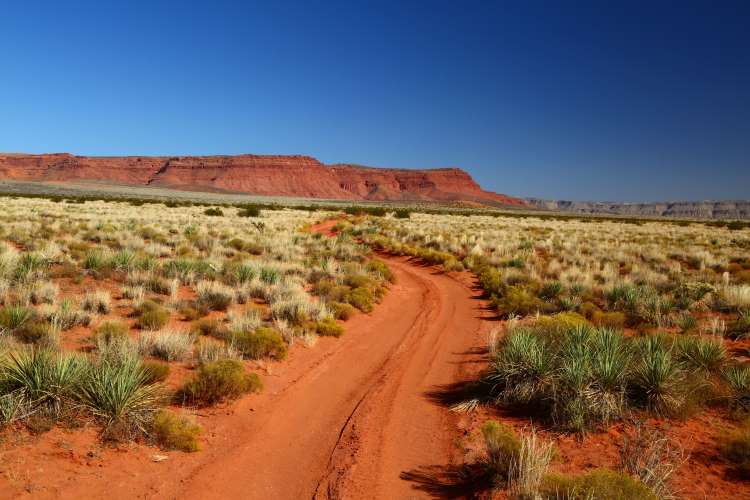
For Christians, this time of the year is known as Advent, and in the excerpt from the New Testament which is read in most churches around the world this coming Sunday, John the Baptist, the cousin of Jesus, takes centre stage. In Matthew’s Gospel (Matthew 3:1-12) he appears in the desert of Judea, in clothing made of camel’s hair, with a leather belt around his waist. His food was locusts and wild honey and he baptised those who came to him in the Jordan River as they acknowledged their sins.
I believe the desert, from which John the Baptist emerged, may be understood at several different levels. One is to naturally think of the desert as an actual place, like we might think of the wilderness regions of Outback Australia. But it is also possible to think of the desert as something that can exist from within, in our deepest being, an inner geography of abandonment; the desert within being the valley of our deepest solitude. The desert, therefore, is not primarily a place, but an experience. It is not a setting, but a state of being within.
It is true to say that there has been a revival of interest in recent decades in the story and the spirituality of the desert. My library has many books on the subject. And monastic libraries are full of such books. The story of the desert is associated with the Christian Desert Father and Mothers who fled into the deserts of Egypt, Palestine, Arabia and Persia in the 4th and 5th centuries. They fled into the desert to find both themselves and God.
But the desert tradition, however, finds its origins much earlier in the Hebrew Scriptures, especially in the epic story we call the Exodus. The long years of the Exodus were a period of testing and discovery, and it was in the desert that the children of Israel received the Law, and found their vocation and identity.
Importantly, the solitude of the desert teaches the necessity of waiting upon God. And waiting upon God is one of the great themes of the Advent season. It teaches lessons of patience, attentiveness, an unhurried learning, waiting in silence, and perseverance. But the desert, is also a place of testing. The desert exposes our vulnerabilities and brings to the surface those fears that are buried deep within ourselves.
So if you go to the desert to rid yourself of all those awful problems in life, you will, in fact, be wasting your time. Rather, you go to the desert for a total confrontation with yourself, for one goes to the desert, to see more, and to see better. One goes to the desert especially to take a closer look at those things one would rather not see, to face situations one would rather avoid, and to answer questions one would rather forget.
For American Trappist monk, Thomas Merton, one of the great Christian Spiritual thinkers of the 20th century, his whole life was a journey into the desert. After making a retreat at the Cistercian Abbey of Our Lady of Gethsemani in Kentucky, Merton wrote to the Abbot asking if there was any prospect of him being received as a novice. The abbot received him into the community in 1941 at the age of 26. But despite the austerities of Cistercian life at that time, Thomas Merton longed for even more solitude, and in 1965 at the age of 50, he received permission to take up full-time residence in a small hermitage dwelling on the monastic property. What did life in his hermitage teach him? He wrote in his book, ‘The Silent Life’ the following (and please forgive the none inclusive language of the time): ‘The world of men,’ he wrote, ‘has forgotten the joys of silence, the peace of solitude which is necessary, to some extent, for the fullness of human living. Not all men are called to be hermits, but all men need enough silence and solitude in their lives to enable the deep inner voice of their own true self to be heard at least occasionally. When that inner voice is not heard, when man cannot attain to the spiritual peace that comes from being perfectly at one with his own true self, his life is always miserable and exhausting. For he cannot go on happily for long unless he is in contact with the springs of spiritual life which are hidden in the depths of his own soul.’
Thomas Merton was emphatic on the need for solitude in the life of every Christian. Every Christian needs to take time out to be alone with God – it can take the form of a day retreat, an hour’s walk along the beach, or a quiet time in your favourite room in the house. Those who wish the lead a spiritual life need to make their own desert space. ‘Without solitude of some sort, there is, and can be, no maturity’, Thomas Merton wrote, and ‘unless individuals become empty and alone, they cannot give themselves in love, because they do not possess the deep self which is the only gift worthy of love.’
Thomas Merton, I believe, was truly a very spiritual, holy and insightful man, a true saint of the 20th century. He knew what was most needed to lead a truly spiritual life; the cultivation of an inner desert.
 Philip John Bewley
Interesting, Philip, and very well written. The sermon yesterday (Philip Gill) was essentially parallel, though for him it was wilderness’, because of the gospel. The wilderness within us.
One word of caution. Don’t spend too much time on this blog, it will detract from your thesis work.
I wish you and Andrew a happy Christmas, in case I don’t see you until 2020!
Elizabeth ________________________________
LikeLike